As Vietnam's capital market enters a phase of deep integration, the quality of investor relations (IR) is increasingly becoming a measure of a company's governance capacity, transparency, and long-term attractiveness. Looking back on that journey, Mr. Duong Thanh Danh Francois – Permanent Vice Chairman of the Board of Directors of PVI Holdings (HNX: PVI) – shared his views on the strategic role of IR, PVI's investment story, and how the company has built lasting trust with domestic and international shareholders and investors.
In the context of the Vietnamese stock market moving towards higher standards of transparency, corporate governance, and English-language disclosure, how should PVI's investor relations activities change to not only keep pace but also surpass expectations?
Mr. Duong Thanh Danh Francois: As Vietnam's capital market enters a new cycle of integration, investor relations (IR) cannot be viewed merely as a department fulfilling information disclosure obligations. IR must become a strategic capability, connecting the Board of Directors, the Executive Board, business operations, and the capital market; and simultaneously transforming the company's strategy into clear, consistent, and verifiable information.
PVI aims to elevate its investor relations (IR) capabilities in three areas. First, it shifts from "compliance" to "proactive transparency": not only ensuring complete and timely information but also enhancing its usefulness, comparability, and accessibility for each investor group. Next, it standardizes content according to international practices, especially for English-language reports, corporate governance, ESG, risk management, and long-term strategic direction. Finally, it promotes the application of data and technology to monitor information needs , shorten response times, and progressively personalize the investor experience.
The foundation for PVI to implement this roadmap has been built over many years. The company's website now dedicates separate sections to information disclosure, investor news, periodic business results, shareholder meetings, annual reports, corporate governance, and sustainable development; all key documents are published bilingually. PVI's continued achievement of the Information Disclosure Standard for 2026 is a recognition of this discipline and consistency.
We believe that businesses are valued by the market not because they disclose the most information, but because they provide the right information that investors need, at the right time, with reliable quality and a willingness to engage in dialogue.
Modern investors are interested in financial reporting but also have high demands for ESG and risk management capabilities. What should investor relations (IR) do to both meet and sustainably lead market expectations?
Today's investors are not just asking how much profit a business generates in a year; they also want to understand where that profit comes from, whether it's sustainable, and what risks the business is managing to protect its value over the next 5-10 years.
Therefore, IR's task is not to chase every short-term fluctuation in market expectations. IR needs to help the market form accurate expectations through three layers of information: growth drivers and competitiveness; capital allocation discipline and capital utilization efficiency; and finally, governance foundations, ESG, and risk management.
For a financial and insurance group like PVI, risk management is not merely a control requirement but a core part of its profit-generating model. In 2025, amidst natural disasters and rising compensation costs, PVI still recorded consolidated revenue of VND 28,923 billion and pre-tax profit of VND 1,460 billion. This result demonstrates that growth is only truly meaningful when accompanied by professional discipline, appropriate reserves, reinsurance capacity, and prudent investment management.
Successful investor relations (IR) is when investors not only know what results PVI has achieved, but also understand why those results can be sustained and how PVI is preparing for future risks.
A recurring challenge for listed companies is how to ensure that market price more accurately reflects intrinsic value. How does PVI's investor relations (IR) strategy approach this valuation problem?
No investor relations (IR) strategy can replace intrinsic value. IR is only effective when a business has a solid foundation, good governance, and consistently fulfills its stated commitments.
The role of investor relations (IR) is to bridge the information gap between the company and the market. PVI achieves this by building a clear investment narrative; improving the quality, consistency, and comparability of information; strengthening dialogue with shareholders, institutional investors, analysts, and rating agencies; and maintaining discipline in strategy execution.
PVI's annual report was honored in the Top 10 Best Annual Reports of 2025 for its ability to connect strategy, risk, operations, and business results, along with its transparency regarding governance mechanisms and ESG indicators. This is how PVI helps investors see the company in a more complete picture, instead of relying on just a few short-term financial indicators.
Our position is clear: Investor Relations (IR) doesn't create stock prices, but it can help the market understand the business correctly, thereby facilitating a fairer recognition of its value.
What elements in the “investment story” make PVI different and attractive to long-term capital flows, especially foreign investors?
International investors typically assess growth quality, risk management capabilities, and the predictability of cash flow, rather than just looking at revenue growth rate. PVI's investment story is built on five pillars.
Firstly, PVI Insurance maintains its leading position in the non-life insurance sector, particularly in the industrial and large-scale project segments. In 2025, PVI Insurance surpassed the $1 billion revenue mark, achieving total revenue of VND 27,266 billion, pre-tax profit of VND 1,066 billion, and continuing to lead the market for the fourth consecutive year.
Secondly, the model is multi-pillar, comprising insurance, reinsurance, and asset management. PVI Insurance creates scale and cash flow; Hanoi Re expands reinsurance capacity and international markets; and PVI AM plays the role of asset management and allocation. This complementarity helps the system increase its resilience to fluctuations in each business cycle.
Thirdly, it boasts an international governance framework with the support of strategic shareholder HDI Global SE.
Fourthly, there is the discipline of capital allocation – ensuring both financial security and growth resources while maintaining shareholder interests. In 2025, PVI approved a total dividend of 33%, including 23% in cash and 10% in shares.
Fifth is the commitment to sustainable development – using governance, transparency, and risk management as the foundation for creating long-term value.
This is an investment story based on proven capabilities rather than just future expectations.
PVI is leading the non-life insurance market. What are the solid advantages that will enable the company to both protect its market share and maintain profitability over the next 3-5 years?
PVI does not choose to compete at all costs. Our sustainable advantage comes from our risk assessment and management capabilities, industrial insurance experience, service quality, and ability to arrange reinsurance on a large scale.
The PVI system has three outstanding advantages: a foundation of expertise accumulated through numerous key projects; reinsurance and risk management capabilities that meet international standards; and a financial ecosystem that allows for more efficient customer acquisition, cash flow management, and capital allocation.
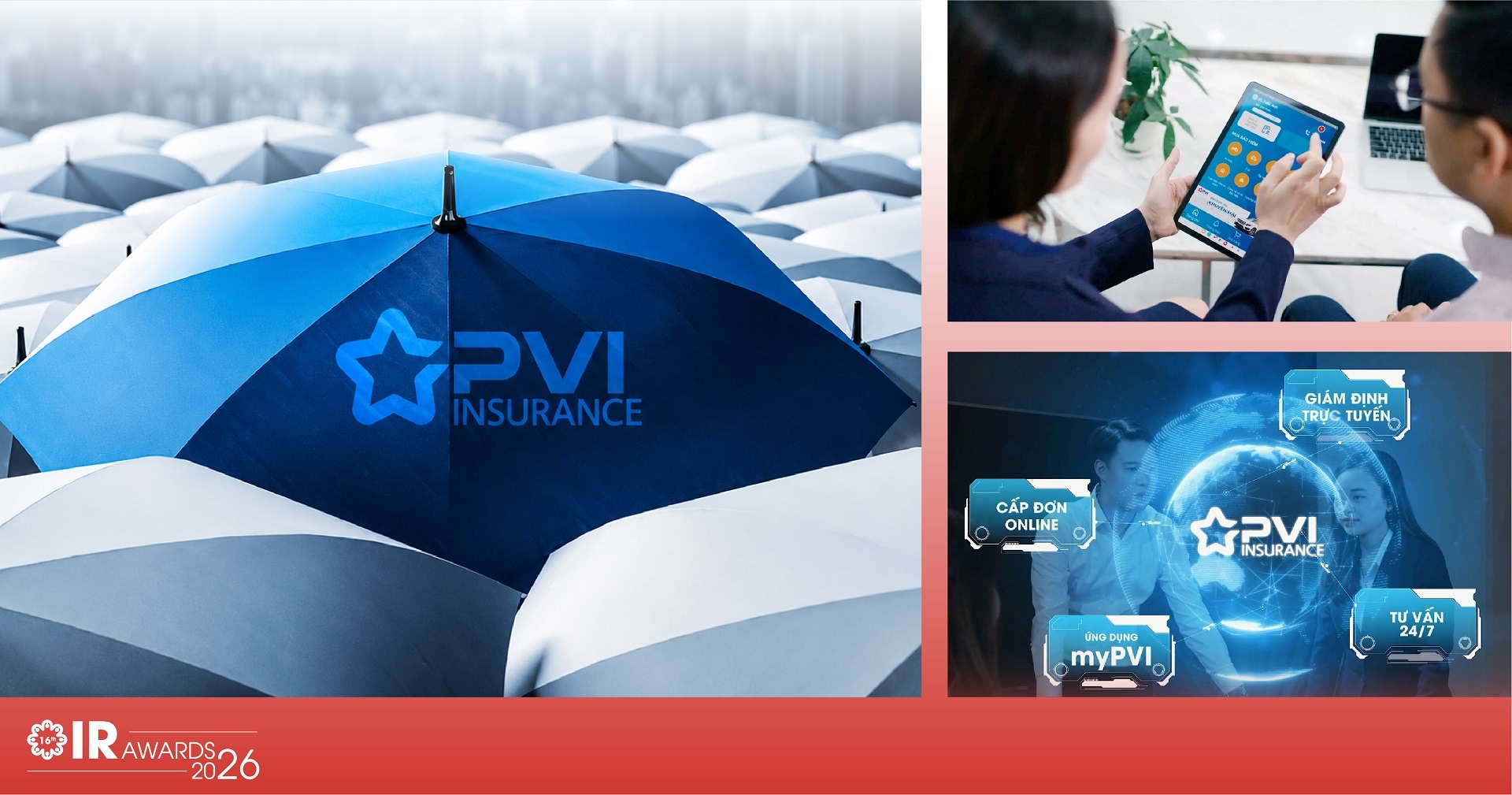
In the coming period, PVI will continue to selectively invest in data, automation, and AI; improve operational productivity, underwriting quality, and claims handling experience; while closely controlling the combined ratio and efficiency of each portfolio. The goal is not just to increase scale, but to achieve quality growth and generate sustainable profits.
How has strategic shareholder HDI Global supported PVI in enhancing its competitiveness and business quality?
HDI Global is a strategic shareholder and a partner in knowledge, governance, and international standards. The most important value lies not only in capital but also in access to global industrial insurance expertise, modern risk management models, reinsurance capabilities, portfolio management, and a culture of transparency.
This collaboration helps PVI gradually synchronize its risk management system with Talanx/HDI, improving decision-making quality and strengthening its reputation with international customers, partners, and investors. Independent ratings are an objective indicator: PVI Insurance maintains its financial strength rating of A- (Excellent) with a stable outlook; in March 2026, Hanoi Re was upgraded by AM Best to a long-term issuer credit rating of “bbb+”, while maintaining its financial strength rating of B++ (Good) and country rating of aaa.VN.
In the long term, better governance quality and risk control will contribute to reduced uncertainty, strengthen market confidence, and help businesses access capital more easily.
PVI is known for its stable dividend policy. If the company needs additional resources for expansion or technology investment, how will PVI balance dividends and retained earnings?
PVI has always considered dividends a crucial commitment to its shareholders. Maintaining a cash dividend rate of 20% or more for many years reflects the company's ability to generate cash flow and its financial discipline.
However, shareholder benefits lie not only in the annual dividend but also in the potential for long-term business value appreciation. When investment opportunities with the potential for attractive returns arise, PVI will be transparent about the intended use of capital, expected efficiency, payback period, and associated risks. Every decision to retain profits must be justified by the added value created for shareholders.
The dividend plan for 2025 – 23% in cash and 10% in shares – is an example of balancing the immediate interests of shareholders with strengthening capital for the next development phase. PVI's goal is not to maximize dividends each year, but to optimize shareholder benefits in the long term.
In the face of financial market fluctuations, natural disasters, and geopolitical risks, how does PVI build a risk management "shield"?
For insurance companies, risk management is not the last line of defense but the foundation of their business strategy. PVI operates an enterprise risk management system, internal controls, and reinsurance program to identify, quantify, limit, and appropriately transfer risks.
The system regularly assesses scenarios related to natural disasters, large losses, interest rate fluctuations, exchange rates, liquidity, and investment markets. Simultaneously, PVI maintains operational discipline, limits risk accumulation, employs an appropriate reinsurance structure, and adheres to necessary capital adequacy margins.
In 2025, PVI paid out over VND 4,000 billion in compensation amidst increasing natural disasters, thereby fulfilling its role as a "financial shield" for customers while maintaining business efficiency. PVI's goal is not to avoid risk, but to understand risk more deeply, value it more accurately, and manage it better.
Over the next 10 years, where does PVI aim to position itself on the map of the Vietnamese and regional insurance industry?
PVI's goal is not just to maintain its leading position in Vietnam. We aim to become a leading financial and insurance group in the region, recognized by international governance standards, superior risk management capabilities, and the ability to create sustainable value for shareholders, customers, employees, and the community.
From PVI's perspective, leadership is not measured solely by revenue size or market share. More importantly, it's about market trust, quality of governance, the ability to fulfill commitments, and the sustainability of the business model across cycles.
These core values have been objectively recognized by the international market. Most recently, on July 20, 2026, InsuranceAsia News announced the results of the Country Awards for Excellence - Vietnam 2026. The PVI ecosystem had a memorable honor, winning 5 out of 10 award categories, further affirming its leading position in the Vietnamese insurance and reinsurance market. PVI Insurance made the most significant impact, being named in three important categories: Best General Insurer (Commercial), Best Digital Insurer, and Outstanding Claims Management. This achievement comprehensively reflects the company's competitiveness – from the scale of its commercial business and its digital transformation capabilities to the quality of its claims settlement operations. In addition, Mr. Pham Anh Duc, General Director of PVI Insurance, was also selected by the judging panel as Outstanding CEO of the Year. In the reinsurance sector, Hanoi Re was honored with the Best (Re)Insurer award, a particularly significant recognition coinciding with the company's 15th anniversary. Simultaneously, in the asset management field, PVI Fund Management Joint Stock Company (PVIAM) was proudly awarded the "Asset Management Company of the Year - Fixed Income Investment Category (Vietnam)" by The Asset magazine at The Asset Triple A Sustainable Investing Awards 2026.
It can be said that, after 30 years of formation and development, PVI has become a leading insurance and financial institution in the region, building an extremely solid foundation. Entering the next phase of development in the coming decade, PVI has identified two overarching directions: continuing to ensure the safety of key national projects and crucial economic sectors; and proactively expanding its development and integration capabilities to compete effectively in the international market. Based on this, PVI is focusing on implementing three key action priorities: sustainable development according to ESG standards with transparent governance and global standards; promoting the application of technology as a growth driver; and long-term investment in human resources, considering this the foundation of the company's strength and identity.
With a 30-year foundation built on hard work, the company will continue its stable and sustainable development, in parallel with the development of the energy sector and the national economy. Throughout this journey, Investor Relations (IR) will continue to be the bridge connecting PVI to its strategy in a transparent, consistent, and responsible manner. We hope that each dialogue with investors will not only provide more information but also deepen understanding and confidence in PVI's long-term value.
Thank you, sir.